VETTEXX
UX Design Project
Overview
This project focused on improving the usability and efficiency of veterinary practice management software used in a clinical setting. In fast-paced environments such as ER and internal medicine, existing systems often created friction through unclear workflows, fragmented information, and inefficient navigation. The goal was to redesign key interactions to support faster, more accurate task completion and reduce cognitive load for clinical staff.
Project Details Problem
Veterinary staff relied on software that was not designed with real clinical workflows in mind. This led to:
Time lost navigating between screens
Inconsistent data entry and communication gaps
Increased cognitive load during high-pressure cases
Frustration and reduced efficiency among staff
Goal
Design a more intuitive and streamlined user experience that aligns with real clinical workflows, improves task efficiency, and supports clear communication across veterinary teams.
Process
Research
Observed day-to-day clinical workflows in ER and internal medicine
Identified common pain points in scheduling, patient records, and treatment tracking
Gathered informal user feedback from veterinary technicians and staff
Analysis
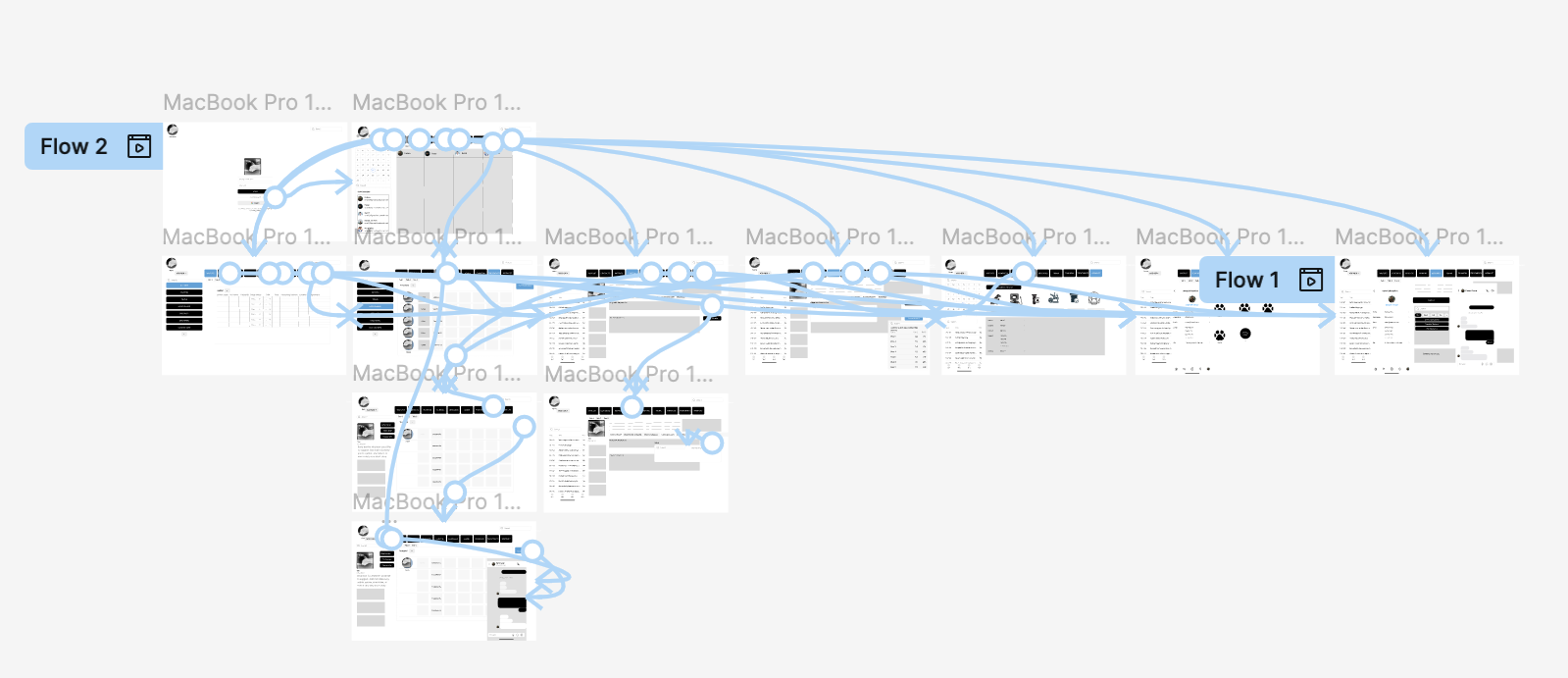
Mapped user journeys for key tasks (patient intake, treatment updates, discharge)
Identified breakdowns in information hierarchy and navigation
Prioritized areas with the highest impact on efficiency and clarity
Design
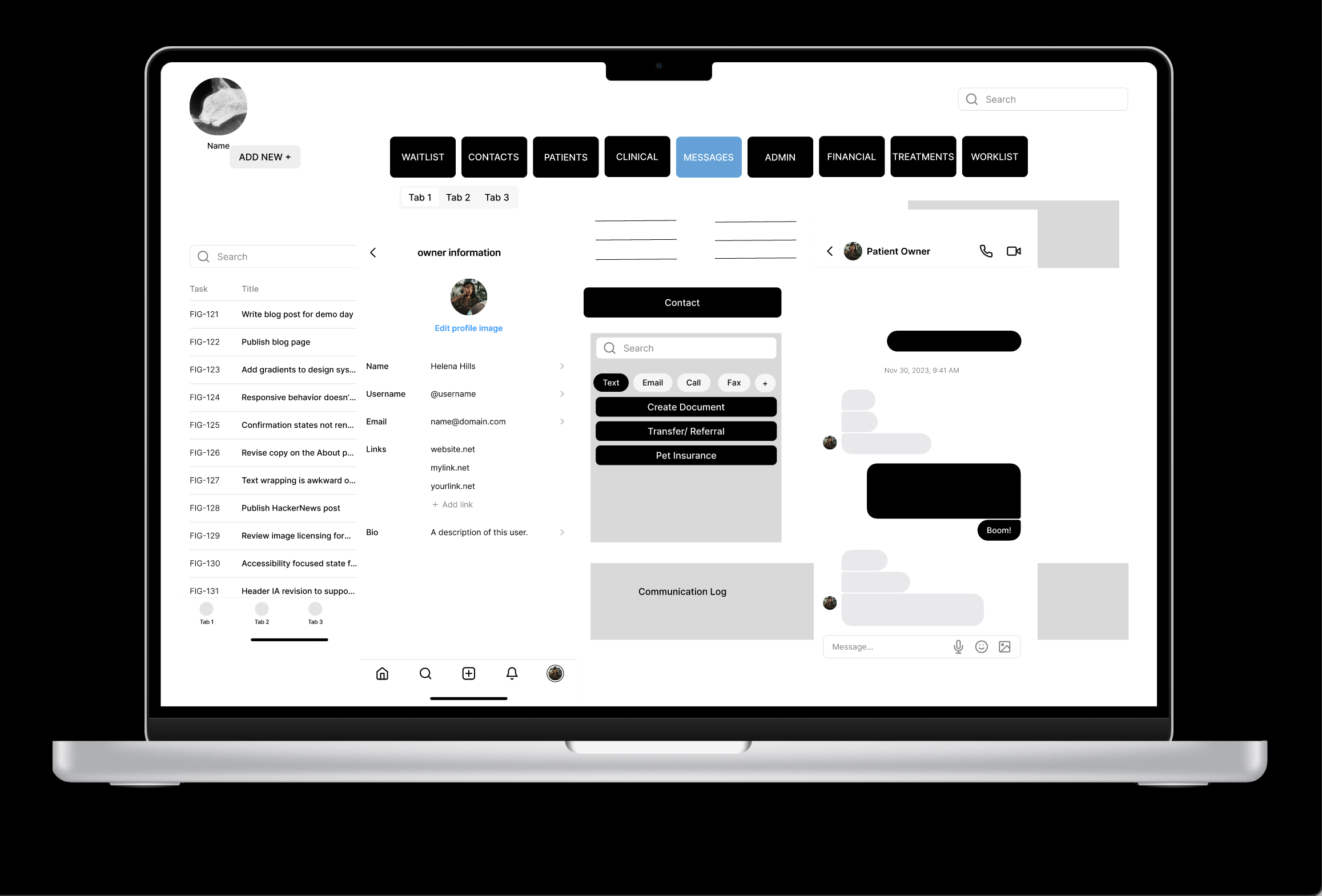
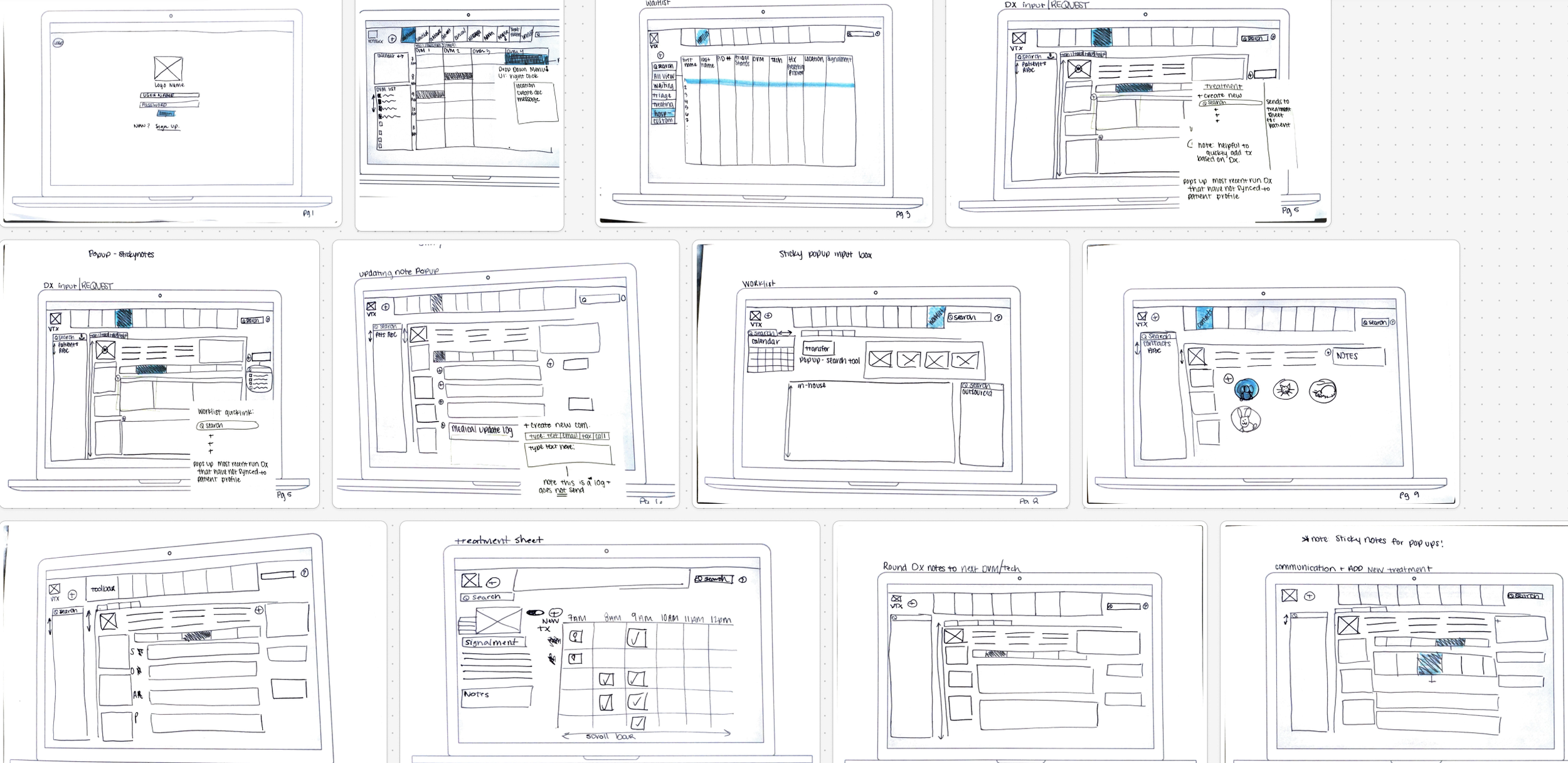
Created wireframes and prototypes in Figma
Simplified navigation and reduced unnecessary steps in key workflows
Improved layout and visual hierarchy for faster information scanning
Standardized components for consistency across the system
Iteration
Refined designs based on feedback from users in clinical roles
Adjusted workflows to better match real-world use cases
Solution
The redesigned system introduced:
Streamlined workflows for common tasks
Clearer organization of patient data and treatment information
Improved visual hierarchy for faster decision-making
Reduced steps required to complete critical actions
Outcome
Improved task efficiency and reduced time spent navigating the system
Increased clarity in communication across team members
Reduced reliance on verbal clarification and workarounds
More intuitive onboarding for new staff
Key Skills
UX Research • Workflow Mapping • Wireframing • Prototyping (Figma) • Information Architecture • Clinical Communication • Problem Solving